THE SANCTUARY VILLAGE PROJECT
The First 100 Families
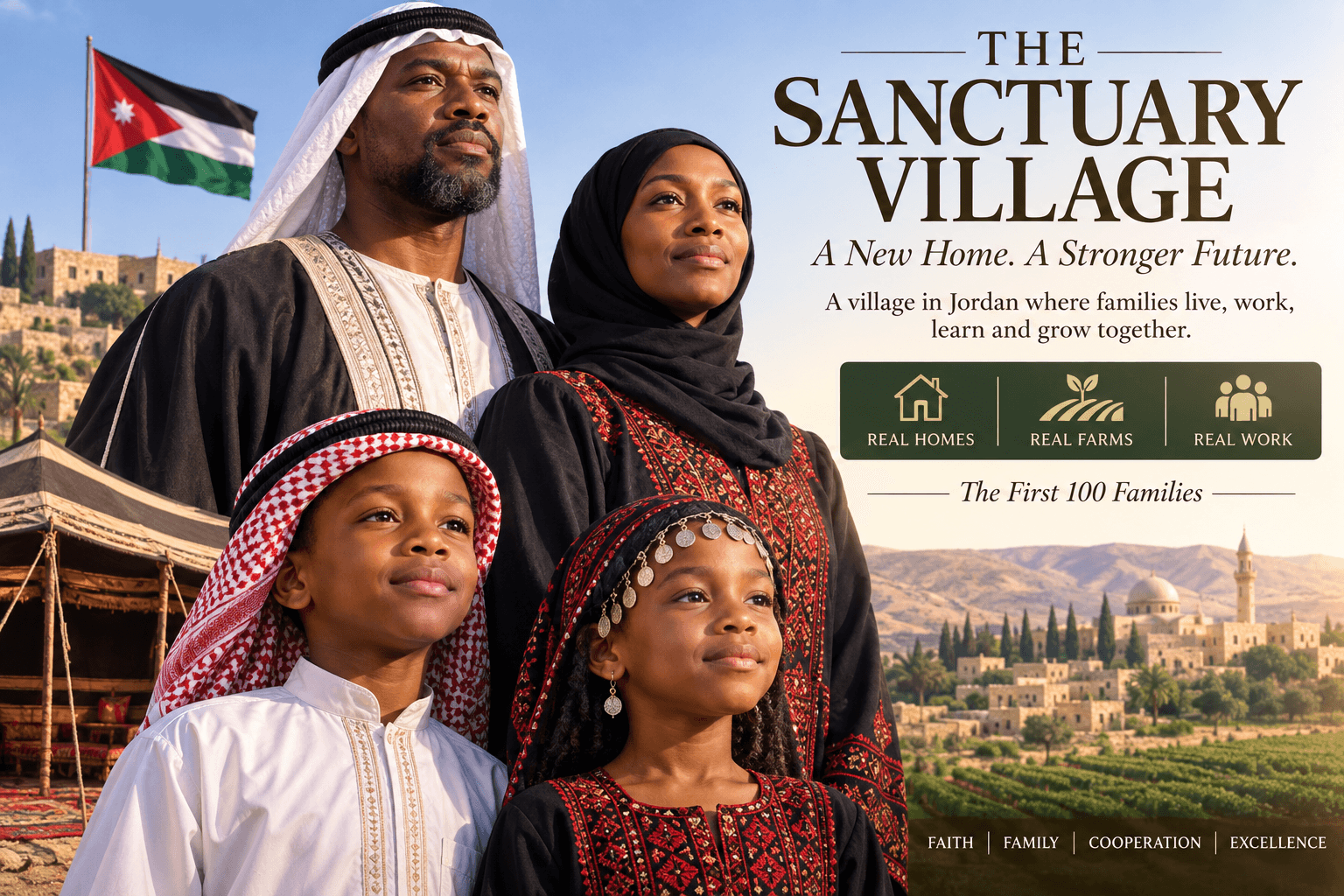
We are building a village in Jordan. Real homes. Real farms. Real work. A place where 100 families live and grow together.
Every class fee goes into the village startup fund.
SECTION 1 — THE VISION
A village that works together
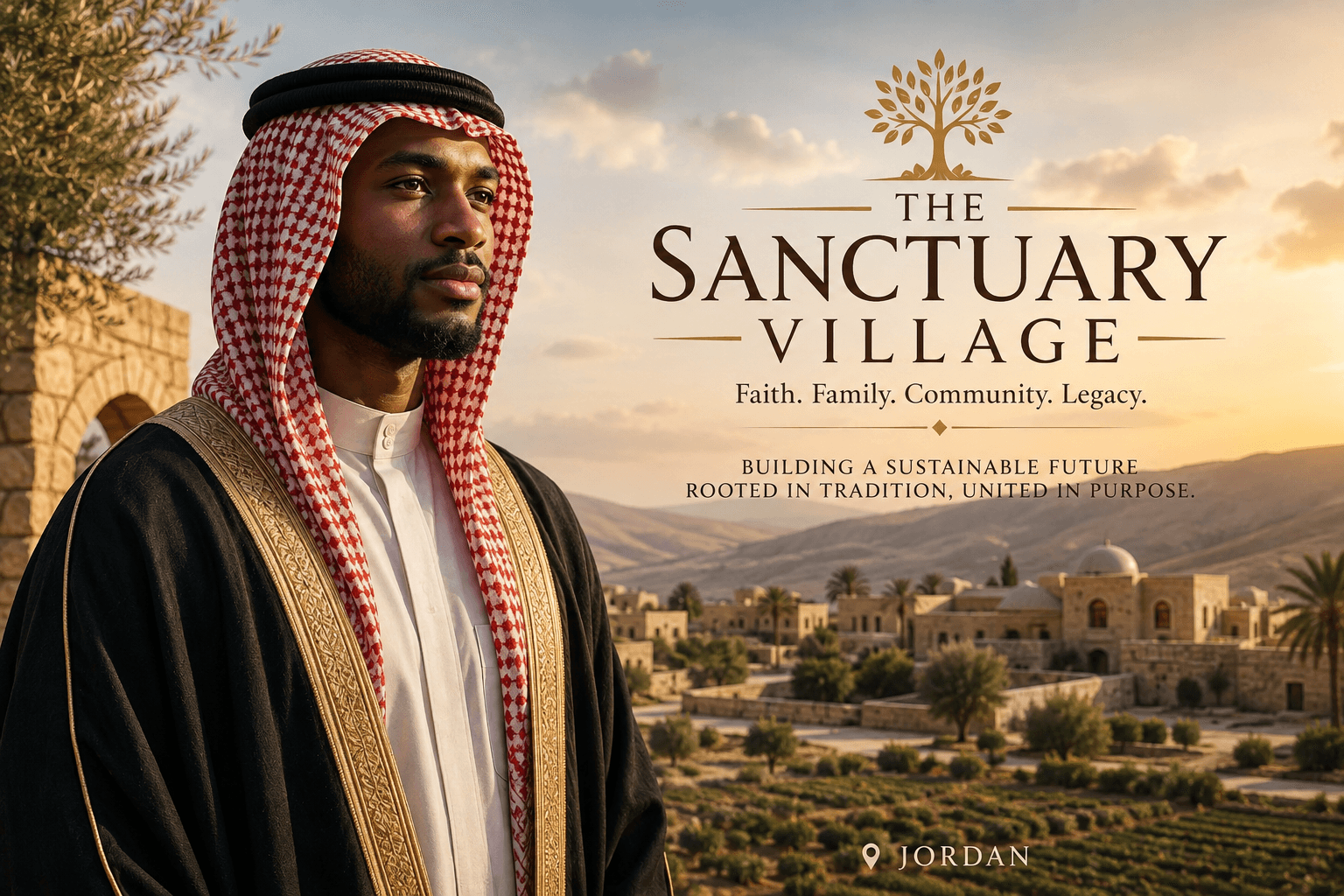
Most people today live alone, even in a crowd. We are building something different: a village where neighbors know each other, work together, and help each other grow.
The first village will hold about 100 families — around 600 people. Big families and small families. Farmers, builders, teachers, and makers. Everyone has a home. Everyone has work. Everyone belongs.
Our one big rule:
The village exists because we exist together.
SECTION 2 — HOW THE VILLAGE WORKS (THE 70/30 MODEL)
Two kinds of founding members
For every 100 families, there are two groups:
70 Capital Members.
These families bring the money that builds the village: the homes, the roads, the water, the farms, and the workshops.
30 Workforce Members.
These families bring the work: building, farming, cooking, fixing, and running the village businesses.
Capital members pay their own share, plus a 40% capitalization fee. That extra money builds the homes and workplaces for the workforce members.
This is not charity. It is how a village starts:
Money builds the village. Workers bring it to life. What the village earns helps it grow.
Donations through our 30 Days to Build campaign help cover the rest and take the first steps — buying the first land and bringing in the first workers.
SECTION 3 — YOUR JOURNEY AS A MEMBER
Step by step, from newcomer to villager
- 1.
Apply. Tell us about your family and your skills. Agree to the village laws and customs. (No house or land is picked yet — that comes later, and it is the same for everyone.)
- 2.
Arrive and learn. Get a mentor. Learn the map, the rules, the schedule, and the customs.
- 3.
Three months of training.
- ·Month 1 — Learn. Watch how the village works. Ask questions.
- ·Month 2 — Join in. Work with a team. Farm, build, cook, help.
- ·Month 3 — Give back. Lead a task. Help someone newer than you.
- 4.
Six-month check-in. Can you live and work well in the village? We look together.
- 5.
One year. You become an Established Village Member. Now you help teach the next new families.
Every spring, the whole village lives in tents for 7 days. We cook together, tell stories, play, and remember our traditions. Everyone joins — new members and old.
SECTION 4 — WHAT IT COSTS
The honest numbers
These are planning estimates. Final numbers come after engineering and land studies.
Dollar amounts are estimates at the August 2026 exchange rate.
Building the whole village for 100 families over the first 2 years costs about:
8.8 million JOD
(about $12.4 million USD)
| What the money builds | JOD | USD |
|---|---|---|
| Permanent village things — land, homes, roads, water, farms, workshops | 5.35M JD | ~$7.5M |
| Running the village for the first 2 years | 2.66M JD | ~$3.8M |
| Safety reserve for surprises | 0.80M JD | ~$1.1M |
| Total | 8.81M JD | ~$12.4M |
What it costs per person
Take the whole cost and divide it by about 630 people. Each person's share of building the village is about:
14,000 JOD per person
(about $19,700 USD)
Here is where that money goes, for each person:
| JOD | USD | |
|---|---|---|
| A home | ~4,000 JD | ~$5,600 |
| Food and daily needs (2 years) | ~2,100 JD | ~$3,000 |
| Roads, water, power, community | ~5,600 JD | ~$7,900 |
| Farms, shops, and workplaces | ~2,300 JD | ~$3,200 |
| Total | ~14,000 JD | ~$19,700 |
Important: this is NOT a price tag. This is what it costs to build a village life around one person. What your family actually brings depends on your family size, your home, your work, and which group you join. Some families bring money. Some bring work. Some bring both.
By family size
| Family size | 2-year development value |
|---|---|
| 1 person | 14,000 JD (~$19,700) |
| 3 people | 42,000 JD (~$59,200) |
| 4 people | 56,000 JD (~$79,000) |
| 6 people | 84,000 JD (~$118,400) |
| 8 people | 112,000 JD (~$157,900) |
| 12 people | 168,000 JD (~$236,900) |
Again — this is the cost of building village life for a family that size. It is not a bill. Bigger families need bigger homes, but sharing roads, water, and farms makes each person's share smaller than living alone.
SECTION 5 — WHERE WE ARE GOING
The village grows itself
The village is built to grow with its own strength:
- 1.
Build. Capital members and donors fund the first homes and farms.
- 2.
Wake up. Workforce members start the farms, workshops, and businesses.
- 3.
Earn. The village sells crops, bricks, buildings, and goods.
- 4.
Save and reinvest. Part of what the village earns builds homes for the next families.
- 5.
Grow. More families join. The village gets stronger.
The plan:
- ·Phase 1: First land. First 25–50 families.
- ·Phase 2: Grow to 100 families.
- ·Phase 3: Grow toward 500+ families.
The goal is a village that pays for its own growth — not one that depends on donations forever.
SECTION 6 — CHILDREN & EDUCATION
Every child learns. Every child finds their place.
Children in the village go to school and follow Jordan's educational standards, from early education all the way through university for those who continue. School comes first. During school time and study time, a student's job is simple: learn well and behave well.
Around school, the village adds something most places lost: every young person grows up inside real work and real community. Age-appropriate household chores. Family activities. Village traditions. And as they grow, mentorship — watching the farmers, the builders, the teachers, the medics, the makers — and discovering where they fit.
We ask every young person three questions:
What are you good at? What do you enjoy? What does the community need?
Where those three meet, that is their path. Some will go to university and become doctors, engineers, and teachers. Some will master trades and become builders, electricians, farmers, and mechanics. Some will start businesses. Some will serve the village itself.
And here is our standard:
Academic excellence is respected. Skilled work is respected. Service is respected. A strong village needs doctors AND farmers. Engineers AND builders. Scholars AND craftspeople.
No child leaves our education system asked “so, what will you do now?” By then, they have spent years discovering what they can do — and the village already knows where it needs them.
SECTION 7 — BUILT WITH EARTH
Homes made from the ground they stand on
Village homes are built with compressed earth bricks — strong blocks pressed from soil, sand, and a little cement, made right here in Jordan by our own team.
Earth-brick homes stay cool in summer and warm in winter. The walls breathe, so they fight mold. And every home we build trains village workers in a real trade.
Learn about our earth bricks →SECTION — ELEVEN YEARS IN THE MAKING
This village was not planned in a year.
The Sanctuary Village Project stands on eleven years of preparation.
Eleven years of building community relationships on the ground. Of forming tribal alliances — the kind that are earned in rooms and at tables, not signed in offices. Of deep training in the customs and traditions the village will live by. Of training in law, community management, and enforcement — because a village is only as strong as its ability to govern itself fairly. Of quantitative program development — turning what a community needs into systems that can be counted, planned, and repeated.
The application you fill out, the classes you take, the laws you will learn, the traditions you will keep — none of it was invented last month. It is the work of more than a decade, made ready for the first hundred families.
We are not asking you to trust an idea. We are asking you to join a preparation that has been waiting for you for eleven years.
SECTION 8 — THREE WAYS TO START
1. Join the First 100
Tell us about your family. Capital member or workforce member — every family matters.
Register your interestAlready applied? Read your Preparation Package.
2. Take the Village Law & Customs Class
Learn how the village works before it exists. Live classes with the founder. Four modules: the Constitution, the Laws, the Customs, and the Traditions.
See the classEvery class fee goes into the village startup fund.
3. Support the Startup
Our 30 Days to Build campaign funds the first steps: the first land, the first workers, the first bricks.
Support the campaign →THE SANCTUARY VILLAGE PAGES
- Your Preparation Package
What the village asks of a household, and how to get ready.
- The Village Standard
Just weights and measures — the law the village keeps its scales by.
- Apply — The First 100 Families
The application. Read the pages above first.
- The Sacred Clock (opens in a new tab)
The Sacred Clock — the community's calendar: announcements, festivals, and holidays.
“Every spring, we return to the tent — not because we have to, but because we remember who we are.”